Showing posts with label Back to the Well. Show all posts

Monday, October 15, 2018

My 'Principled Eclecticism'

My afternoon class is literacy--refugees either learning to read and write for the first time in any language or learning the Roman alphabet for the first time WHILE learning to speak and understand English. That is a whole other can of worms. I'm hoping to do an online class soon on what works for me with that group of learners. So let's not talk about them today.

Let's talk about an average week with the seniors, the group I blogged about here last week. In that blog post I mentioned some things that have not worked very well.

No more fighting the translators
Because so many of them have set-in-stone study habits when they emerge from forty years of grammar-translation style second language education, I have abandoned all attempts to pry the translators from their hands. I have read and heard a lot lately about the value of those electronic dictionaries, so now I am working with instead of against them. By compromising and allowing a lot of prep before activities designated as 'no pencils, no dictionaries,' I'm seeing much better levels of cooperation when I ask students to put the machines away just for a little while.

What Happened to PPP?
In response to this post, Geoff Jordan said he was happy to hear about some aspects of how we teach settlement English in Canada, but was "not so pleased to hear that [we] were given the PPP lesson plan as a model." You know what? I am feeling vindicated right about now because within about six months of landing my first teaching job, I was starting to feel like either PPP was unrealistic or I was a defective teacher. I remember trying to get students to the 'free practice' part of the lesson by the end of the class period, and in the case of my lunchtime pronunciation class, that meant get there in under an hour! I did it in the beginning, but it never felt quite right. When I landed the job as teacher of a class full of senior citizens who were always begging me to slow down, I made an executive decision to stray from that model.

So if I am not following Presentation Practice Production or Controlled practice, semi-controlled practice, free practice, then what am I doing every day? That's a good question. I'm not sure I really know or can articulate it well. I know that I am continually listening in on what other teachers do (such as by participating in #CdnELTchat on Twitter, being an active member of Global Innovative Language Teachers on Facebook, attending webinars, reading books, and listening to podcasts by people like Joe Barcroft and Scott Thornbury. I bring all sorts of ideas to the classroom and try them out. Some become part of our routine and others don't withstand the test of time. Following are some of the ideas and practices that have stuck, at least for now.

The Structure of a Module
Everything begins with a needs assessment. Not only do I conduct formal ones at the beginning of each five-month semester, but we often do impromptu votes to help me with minor decisions all through the module.

Secondly, I plan out a module on a particular topic that satisfies one of the needs expressed by the students. For example, students voted to study health. Topics voted for included talking to medical professionals, making appointments, etc. When I mentioned meeting a naturopathic doctor over the weekend at a How to Fair, students perked up. "Would you like me to invite him to speak to you?" They were keen. So we are now doing a module on naturopathic medicine as we gear up for his visit.

I decide what the objective of the module is: have the background knowledge and vocabulary to understand Dr. Oake's talk, to ask him a question or two, and to make an informed decision on whether to seek a consultation from an ND. From there I do task analysis: what skills do we need to build up between now and the presentation? That's what I try to give them over a period of one to two weeks. This particular group has requested no writing and grammar only as the need arises. So I plan some listening, speaking, and reading lessons.

For every module, we make a vocabulary acquisition plan. We keep an easel chart at the front of the class where that module's vocabulary is recorded--often colour coded and grouped by part of speech. We are mindful of which terms promise good 'surrender value,' as Gianfranco Conti calls it. We may quickly turn to COCA to check frequency of use and pencil a number next to the term.

A Lesson
Every lesson begins with a warm-up. Cognitive science tells us that it's helpful to prime the brain for the topic. I use a variety of activities to accomplish this. It could be a brainstorming session where I'm secretary with marker standing at white board, or it could be "think, pair, share" or a KWL chart. I like to activate prior knowledge. My class is made up of engineers, doctors, scientists, pharmacists, etc. They have a lot of knowledge to share with me and with each other.

I would say that from there, things get a little intuitive on my part. I have my very rough plan scribbled out in front of me, but it's not unlike me to completely scrap the plan if I start to feel that it's not going over well. I try to tune into the learners and get a feel for what they need next.

As for that old PPP model, I haven't forgotten it altogether. I loosely follow the idea behind PPP if you consider that early in the week I am asking students to do something with that week's text (audio or written) that is more 'controlled.' I'm trying always to be mindful of the cognitive load of a given activity. In his book Input-Based Incremental Vocabulary Instruction, Joe Barcroft points out that if we cognitively overload students during the initial phase of new lexis exposure, we can actually inhibit uptake / long-term retention of new language! Sometimes I just let students have a block of quiet time with translators. Often I give examples of usage; I pantomime, draw pictures, and pull up Google Images.

Activities
I would say that my teaching style is very activities-based. Once I know what is to be achieved in a particular stage of the module, I reach into my grab bag of activities and choose one that I think fits the need while matching the current mood and interest of the class. If we just did a Dictogloss last week, I probably won't repeat that one this week. Some of my go-to activities are:

  • Each one teach one (Divvy up new vocab two terms per partnership. Each pair produces a small poster with definition, pronunciation, example sentence, illustration. Partner A stays with poster while partner B circulates around room as a student, then As and Bs switch roles.)
  • Jigsaw
  • Dictogloss
  • Conversation groups with photo prompts
  • Extemporaneous speaking (E.g., Students line up As across from Bs; I give each A or perhaps both sides an index card with a topical question and they begin to chat. I ring the bell and Bs move clockwise.)
  • Read aloud with focus on good prosody (linking, phrasing, sentence stress, intonation), remembering that English is a stress-timed language a la Cows Eat Grass.
  • Back to the Well with graphic organizers I developed with John Sivell, Professor Emeritus, AppLing, Brock University.
  • Read or tell a short interesting story then do 'circling,' i.e., yes questions, no questions, which/binary questions, wh- questions
  • projects, presentations, posters
  • role plays
  • pair work
  • group work
  • guest speaker
  • one hour of computer lab per week (buffet-style choices, self-directed)
  • field trips
Team 3 - Teaching us how to fish
Principles
While I'm stitching together this patchwork of activities with more scaffolding at the beginning of a module, there are certain principles I'm attempting to adhere to. The whole thing might appear to an observer to be heavily influenced by dogme.  Even though it was just my undergrad minor, I feel confident when it comes to applied linguistics. Having studied ten languages and having aced advanced English grammar courses, I feel able to respond in the moment to intriguing questions about a grammar point or even a trivia question. I try not to let these raised hands hijack an entire 2.5 hour class, of course! I check in with the students to see if the majority want the tangent. If not, we may put it in the parking lot for a dedicated lesson. But if it's desired by the majority, I often give 'pop-up' grammar or pronunciation lessons.
field trip
Within the last year I've become aware of The Learning Scientists' website and materials. I've shared them with my students and together we've made it a goal to incorporate the six strategies for effective learning in my teaching and their practice. So for example, instead of three solid weeks of health, we did a week on reviewing parts of the body and organs followed by a week of their second chosen topic, Canadian culture (Thanksgiving), then a return to health. That's interleaving. We also have two fun games we play for big review, a way to revisit past pages of that big easel chart. Supposedly this is going to help us get new language into long-term memory!

You will notice that not once have I had to mention Portfolio-based Language Assessment. That's because I wrote a proposal asking for the seniors to be exempted, and this was granted. :) We still have the big white useless binders that I force the seniors to lug home over the summer break. We maintain the About Me section and sometimes even create artifacts--not an easy task since their abilities span CLB 2 to 8.

Materials
In putting together modules for my learners, I tend to create or find one simple audio or written text and use it in a gazillion different ways throughout the week. I long ago learned to, as Leo van Lier once said, "cover less, uncover more." That one text could be from the LINC 1-4 Classroom Activities binder/pdfs or from the Citizenship Resource. It might be a true story about me or a set of pharmaceutical labels. Sometimes, though not often, I do give an explicit grammar lesson, but it is always driven by a need that has arisen while we were using the language, and I always allow students to vote on whether or not to pursue the grammar formally with rules and exercises and all of that. I'd say we agree to that about twice a year. Otherwise, we focus on grammar in context.

Edited to add: I wrote this quickly without much revision or proofreading. Please point out my typos or errors. Also, I notice I didn't say anything under PRINCIPLES about comprehensible input or bottom-up listening activities. These concepts have made it onto my radar but are not yet a fully-formed conscious part of my teaching approach. I'm still studying. I will attempt to blog about emerging practices and principles very soon.

Sunday, May 6, 2018

Welcome, Conference Attendees!

Whether you received one of my MOO cards at the annual TESL London conference or from my friend at BC TEAL's annual conference, welcome to this blog, which doubles as the de facto national PBLA forum and the only one where teachers can share their thoughts and feelings or organize advocacy with the option of remaining anonymous.

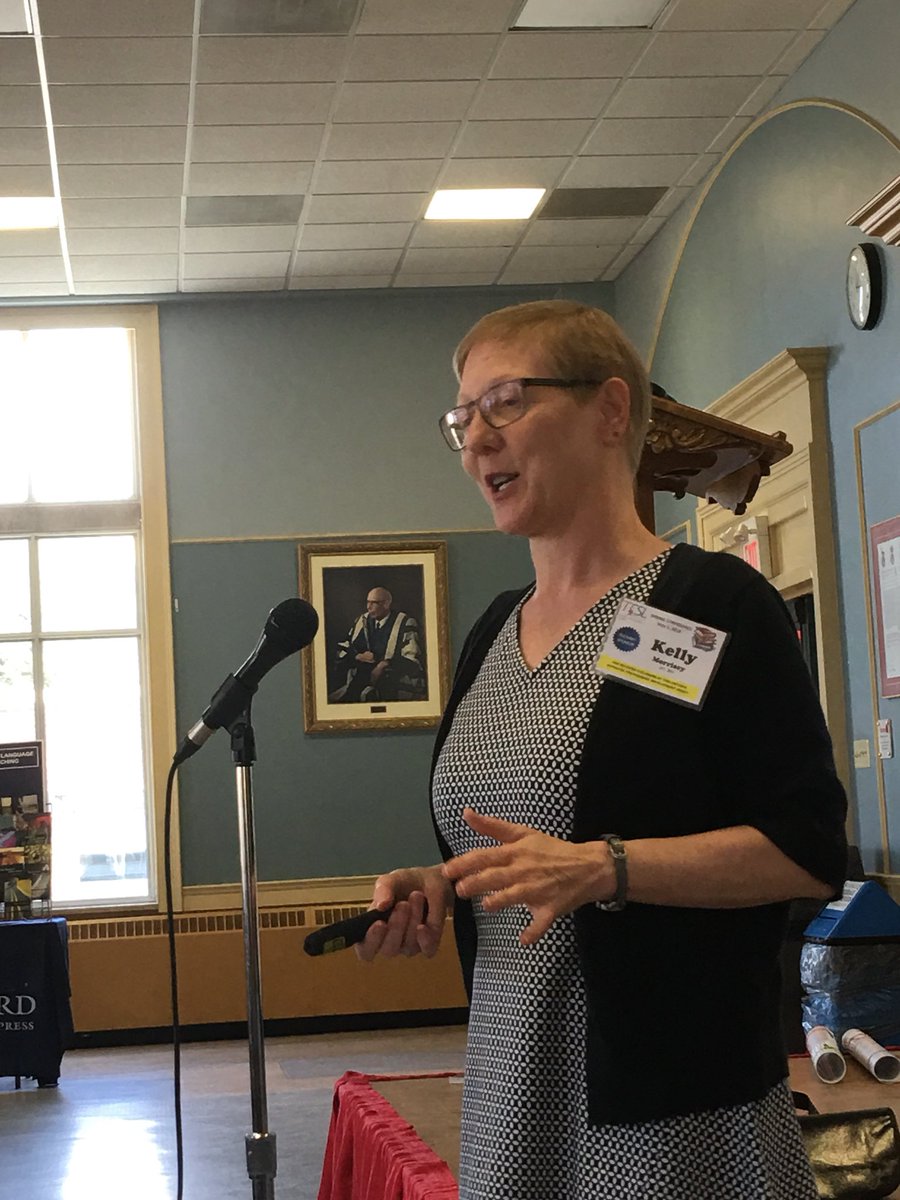
I thought that parts of my plenary presentation went well while other parts bombed. My theoretical overview seemed well received, but the free graphic organizers did not trigger very much discussion or many questions. I didn't quite know how to recover from that, so I simply went on with my example of how even the simplest of resources--a set of pharmacy labels--can be the well that you go back to again and again in order to explore vocabulary, syntax and discourse. I think I should have brought up each handout onto the screen to give teachers an explanation of what happens with them in the classroom and why they are so engaging.

I heard a lot of talk during the materials slam of "contextualized grammar" or "grammar in context." Yet when it came my turn to take the mic, I forgot to tie 'Back to the Well' to this very concept. Of course these graphic organizers--which facilitate activities that you can do with just pencils and notebook paper, for that matter--are about just that! Instead of (or in addition to) getting out the old Azar book to teach about clauses or verb-direct object chains or discourse markers, you can take students back into a familiar text to FIND and exploit the examples that are right there waiting for them.

It was very gratifying to be approached and thanked by teachers who appreciate being able to use this blog as a place to connect with others who are extremely upset by what PBLA is doing to our professional and personal lives. The board member who issued the invitation to me told me more than once how much she appreciates the literacy activity packs that I give away on my website. I really enjoyed the entire conference, including both sessions I attended and the materials slam, which left me wanting the game 'Apples to Apples.' Special thanks to Jen Artan for being on top of all things tech and for getting me and my slides up and running.

If you were holding onto a door prize ticket at the end of the day hoping to get one of the posters I brought and did not win one, you can still grab the PDF from my Google Drive and print it yourself if you have 11" x 17" (preferably glossy) paper and a good colour printer.

Here are the links. When you click one, you will be able to copy the poster over to your own Google Drive where you can either edit first then go to FILE - Download as PDF or just download.

Before You Say, "I'm finished"...

The Seven Cs of an Effective Teacher

Cheers!

Sunday, February 4, 2018

One Week, One Handout (almost)

Anyone who knows me probably knows I have a keen interest in methods such as Dogme and other materials-light approaches. You might also know that I recently joined a Facebook group called Global Innovative Language Teachers, led by Dr. Gianfranco Conti. Well, the other day a member of the group posted a comment in which she expressed appreciation for a graphic organizer she had gotten from one of Dr. Conti's books and which had proven very useful for her language class. Others seemed interested, so (with his permission) I recreated it in Google Drawing--first in A4 for all the European teachers in the group, and then in 8.5" by 11" for those of us in the U.S. and Canada.

You can find it on the FREE - BLANK TEMPLATES page of my website. If you have a Google account, you can click the name of the worksheet to be taken to the master, copy it over to your own Google Drive, and edit for your purposes. If you like it as is, just click the image to download the PDF.

Anyway! I showed it to my morning (seniors) class and they were keen to take it for a test drive. I introduced the form this week, but didn't introduce it on Monday. First we talked about our recent student-teacher conferences that ended our fall/winter term on January 26th. Many people told me that seniors cannot learn the same way young people can. They want even MORE reviewing than I have been giving them. (I admit that over time, I tend to drift away from some good practices and have to be reminded.) They said that as seniors, they learn three new words Monday and forget two on Tuesday.

So I decided it was time for a trip back to our easel chart--where each page full of topical lexical items represents one module we've covered in the past. I flipped back to the very beginning of the pad of paper and asked the first student to choose one useful word* from the sheet. I asked a new student who was brand new to our class and whose English is more developed than most in the room, to be my secretary--writing each word on the white board as I flipped pages. She was great--a good speller with lovely large handwriting.

I flipped to the second page and had the student next to the first one choose a word. Thus we took turns and ended up with about 20 previously studied words on the white board.

"Now take out a piece of paper. You can do this with a partner or on your own, as you wish. I want you to write a short story and incorporate as many of these unrelated words as you can." As usual, I advised Ss with lower writing benchmarks to try to incorporate 4-5 words, while higher level writers could try to incorporate almost all of them. And then I sat down with my tablet and pen to work on the same task while they did it.

We ended up with some really wonderful stories, and I was amazed at my students' creativity. (They have asked me to focus on L/S, so I rarely get to find out if they are creative writers; some really are!) I came around to check papers and point out errors that needed correcting before they shared their stories aloud.

In a subsequent lesson that week, I introduced the Connectigram. I filled in one as an exemplar and projected it. After talking about the whys and wherefores of my use of these connectors, the students took turns trying to put together their sentences. Students discovered that "while" and "since" both have temporal connotations as well as definitions that refer to to causal or logical relationships.

Remembering Conti's admonition to provide students not only with practice on focused processing but also with thorough processing, and recalling that he considered "odd man out" activities to be helpful with this, I created a multiple choice worksheet to complement the Connectigram.

By this time we were at the end of Thursday, as we did some work on our beginning-of-term needs assessment along the way. Friday morning we took up the answers to the quiz, and debated the answers until everyone was satisfied. I then asked the students to take out their stories from earlier in the week and select a few sentences or passages to re-write using their new connector words. This was the point at which I really got to see who understood and who did not. One student had even used "whereas" in place of the temporal "while." See? This is why we have to go Back to the Well. They cannot finish the trial-and-error process without time to test out hypotheses and have them checked.

We finished by watching the three-minute film from the National Film Board's Canada Vignettes, The Log Driver's Waltz. We ran out of time, but Monday we will try to talk about the plot of the little film using some of our new words. Can you say something about the plot using "nevertheless?"


I ended the week feeling very good about how the class had gone. We had successfully (I hope) integrated two new and very different types of students into a class whose chemistry had been cemented for months if not years. We now have equal numbers of Mandarin speakers and students who speak another language, meaning I can now give my Mandarin speakers a partner every week with whom they cannot fall back on their L1 to communicate. The best part was that my prep was minimal. I hope you can make use of these resources--the way I created them or customized.

*I use the term word to mean unit of meaning, whether it be an idiom, phrasal verb or other lexical chunk.

Sunday, January 14, 2018

One Door Closes

My friend and mentor, Dr. John Sivell, who prefers to be addressed simply as John, has decided it's time for him to shift his attention and energies to new projects and endeavours. It's a sad time for him, for his students, and for all of us who looked forward to hearing from him at conferences. 

With his enormous intellect and huge heart, he has given so much to our profession, to teachers in training, to former students, and to me. This last one was something I could only have dreamed of without ever expecting it to happen. I was not even one of his students at Brock, yet he suggested that we co-present at the annual TESL Ontario conference. I was nervous and doubtful, freaking out over every detail while he calmly finished his lunch just minutes before we were to go on.

All of John's emails bear a signature quote at the bottom: The highest good is like water... - Tao Te Ching: 8. I never asked him about it because I instantly understood. I saw that he lived that way. When asked to travel four hours to co-present with me for my affiliate chapter of TESL Ontario, though we could only offer an honorarium that barely covered lodging and gas, he gladly came. He and his wife, Daeng, supped with me and my partner. When I stopped in at his home on my way to Niagara, Daeng prepared a wonderful Thai meal.

John taught me much, and I know I'll never have another friend quite like him.

While John is looking forward to devoting more time to travel and fiction writing, new doors are also opening for me. ATESL has reached out to me in response to a member's request to have us (now just me) repeat the Fast Equals Slow webinar. Right about the same time as that invitation came in, I also got an invitation to be the plenary presenter at the spring conference of another affiliate chapter of TESL Ontario. Of course I have accepted both and am already immersed in thoughts about how I want to change the scope and content of what was once 'our' presentation. Now it's my baby, and my brain is flooded with ideas.

On a completely different note, tonight I finished a 19-page activity pack to complement the Bow Valley College ESL Literacy Reader Mary Gets Sick. It took an entire week of evenings and much of my weekend to create. I think parts of it could be used with CLB 1 and 2 as well as with CLB 2L. I hope that anyone downloading it from my website (LITERACY - HEALTH) will leave me a comment.

Be well. Let me know what you're up to.

Sunday, December 31, 2017

10 Steps to Better Self-care

Right about now many of us are thinking about including better self-care in our resolutions for the new year. Teachers, all of us, from those who teach K-12 to those of us in adult education, are known for donating our energy and personal time in order to give our students an enriched classroom experience. Self-care has never been easy for those of us who've chosen this field. But these days in Canadian settlement English programs--with the roll-out of Portfolio Based Language Assessment--good self-care has become even trickier and more elusive for many of us.

Below are ten ways that I attempt to arrive at the end of the work day or week feeling there is still some energy and time left for me, for my hobbies, for exercise, for family. These are things you may or may not already have thought of or made part of your life. Some of these tips relate to physical well-being, others to mental, spiritual, and emotional wellbeing. I hope you come away with at least one new idea to try in the new year and will take the time to use the comments section to share with us how you feel about this topic.

(1)  Reduce the cognitive load. Or rather, be mindful of where you and your students may be spending cognitive resources that you could free up via routines and wiser organization. Work smarter, not more.
    file folders on computer drive - very organized
  • Keep lists. We only have so much working memory. To feel less stressed throughout the day, I find it helpful to keep a written list of things I have to do. At school I maintain a tiny corner of the whiteboard for the things I need to remember, such as printing out my time sheet for my site supervisor or calling my dentist.
  • Keep well-organized files, both soft and hard. My day is easier and less stressful because I know exactly where everything is. If I need a resource on the topic of citizenship to use with a CLB 3/4 class, I know it's on my flash drive under Canada - Citizenship, which is in alphabetical order along with Canada -  Geography, Canada - Government, and Canada - History. In case you're not already annoyed at my having my ducks lined up in a way that would make Martha Stewart proud, I'll add that establishing a logical file naming convention is another thing I'm very glad I thought of at the beginning of my teaching career. For example, files to do with the ESL Literacy reader "Food from Home" are named Food from Home crossword, Food from Home word shapes, Food from Home activity pack, etc. This way they all end up together on the storage drive.
  • Use routines. Routines free up cognitive real estate for the content of the lesson, and this applies to both student and instructor. When students know what to expect, they can help you more easily. My students know that as soon as they enter the classroom after an absence, it's their job to check "the box" for the worksheets they missed. With routines like this one, the class can practically run itself, which means less stress for me than I would experience in a class where students were continually asking for direction.
woman sleeping - illustration(2)   Get your sleep. I am absolutely amazed at how much better I feel after going to bed early and getting those proverbial eight hours. I smile more. I let go of little annoyances more easily. I remember to breathe.

(3)   Nourish yourself. Stay hydrated and bring healthy meals and snacks every day. This has been a hard one for me, especially hydration. I've found ways to incentivize these new behaviours until they becomes habit:
  • Buy or upcycle a pretty water bottle; maybe even infuse some cucumber, lime, lemon or mint leaves in it. Most of my morning students nurse a little jam jar of green tea with goji berries all day long. They set a great example for me.
  • Buy or make an attractive lunch bag. I had to go online to find one I liked. I make up the first two or three lunches on the weekend and later mix in some leftovers or a Luvo organic frozen dinner for days when I've run out of homemade meals. If you think you don't have time to make healthy meals, let me tell you about grain bowls. I cook up a batch of brown rice or quinoa in my little rice cooker, then open and rinse a can of garbanzo beans, lentils, or other legume. These form the base of my grain bowl. From there I add in something crunchy, such as sunflower seeds, something green, such as seaweed or barely wilted baby spinach leaves. You might like to toss in a soft-boiled egg. Finally, add a dressing of your choice. I just mix up a tiny bit of sesame oil and vinegar. I divide this up into three lunch containers and...Bob's your uncle!
(4)   Guard your breaks. Take breaks away from clients and, if you're an introvert like me, away from colleagues, too. Retreat to a quiet room or close and lock your door. Don't stress out over being perceived as rude. Folks will get over it. If you have to, make a sign for the door that says, "I"m on a legally mandated break. Back at X:00." Do whatever restores you, whether that be deep breathing, cranking up some music, playing a game on your phone, whatever! I see too many of my colleagues spending their entire break and the first fifteen minutes after class trying to be their students' social worker.  That may work for them, but for me it would be a recipe for burnout.

(5)   Take a load off.
  • Follow Martine's Rule Number One. This one ties into 'routines' above.  Remember to delegate to students everything that can be handed off to them. If you didn't have time to make that wonderful graphic organizer, project an exemplar and pass out notebook paper. I did this recently when we needed a Venn Diagram graphic organizer. One student grabbed the tea tin off the hospitality station and started passing it around, as it was the perfect size for our two circles. Literacy students can make flashcards.
  • Strategically place quiet work. I was listening to a podcast from Jennifer Gonzalez / Cult of Pedagogy the other day on the topic of what she calls Grecian Urns. You have to listen to the podcast to find out how she arrived at the term. That's her name for an activity that takes up a lot of time and might be fun, but has no real educational value. She warns us away from them, of course. That being said, even she admits there can be times when you consciously choose to give students an activity that will get them out of your hair because, hey, you can't be ON all the time. This is the point where I admit to you that I embed a quiet activity in the lesson most days at 2:40. That's when my literacy learners and I are worn out. We've been working hard on listening, reading, writing and speaking. They need a break, and I need time to clean up the hospitality station. So that's the point in the day when I give them a puzzle. Yes, the puzzles have SOME value. But honestly? I need twenty minutes of quiet.
(6)   Wear sensible shoes and comfortable clothes. I know this is a hard one for my colleagues who like to wear high heels, but in the end you are going to have to decide which you value more: how you look or how your feet and back feel after hours of standing, walking, and stair-climbing. I find that I enjoy going to work more when I can spend my day dressed in clothes made from natural fibres that breathe and that are tailored to allow for easy movement. I am a big fan of Lagenlook. As for shoes, I've tried many brands and have found I can rely on Joseph Siebel and Blundstone for their comfort, support, and longevity.

(7)   Be authentic. It takes a lot less energy to be yourself than it does to wear a mask all day long.
Not very long ago, I was experiencing the emotional and physiological vagaries that accompany menopause. Because my students and I have an honest, real relationship in which I am a human being who happens to be the facilitator of their language learning and collaborator in shaping their curriculum, I was able to be candid with them regarding what was going on with me. During an especially difficult morning, I whispered to one of them, "I need to step out. Can you lead the lesson for five minutes?" I indicated to her what was going on. The transition was seamless. I knew I could trust the students to carry on without me. Because we are real with each other every day, this was no big deal. I also need to note that our way of being together also empowers my students to be their fullest selves. The student in whom I confided is a retired OB/GYN. I was honouring what she brings to our group--her expertise as a physician specializing in women's reproductive system--when I chose her to receive my whispered 'I need to step out' and my reason for needing to do so.

(8)   Work smarter, not longer. Weave in some Back-to-the-Well. Cut your marking time in half. Go materials-light at least some of the time (see also Dogme in ELT).  By following recommendations for the teaching of vocabulary or lexical chunks as outlined by Gianfranco Conti on his blog and in this week's blog post about a shift from focused to thorough processing, I believe you will end up making life easier on yourself while becoming a more effective language instructor.

(9)   Advocate for yourself and for your team. The number of signatures on this petition says to me that settlement English teachers in Canada are facing a crisis in their agencies and classrooms. If you are happy with Portfolio Based Language Assessment as it is being implemented at your workplace, then scroll on; number nine is not for you. If you are unhappy with what is happening, find a way to connect with others in your field. At the very least, get your head out of Canada and join a group such as the Facebook group Global Innovative Language Teachers, where trends and fads such as this one can be put into a wider context.

(10)   Protect your capacity for joy. If doing your job well and having a life outside of teaching have become mutually exclusive, it is time to re-evaluate. Life is too short to live it in such a way that you turn down play dates with children, don't ever walk in the woods, never find time for a day trip, no longer have time for hobbies. Decide now, before the new year begins, where you're going to draw the line. What will be your signal to yourself that enough is enough?

Done is better than perfect - illustrationWhen my lesson planning is corralled and self-care managed to the extent that I have time and energy for an evening class one or two nights a week, date nights with my partner, and blocks of unstructured down time throughout the week, I know I am achieving work-life balance. If not, that's when I know it's time to step back and see what's going awry.

How about you? Are you making resolutions to do with self-care in the new year? Do you have self-care strategies to share with me and with our peers in this field? We would love to hear.

Sunday, December 17, 2017

FREEBIE! Winter Break Wordless Picture Book

It's nice to have the webinar behind me. I can go back to what I enjoy most: illustrating and making learning materials! I spent today revamping a little 8-page wordless book about winter break that prints two-sided and folds in the middle for stapling. The whole book requires just 2 sheets of 8.5 by 11" paper. It uses only a tiny bit of colour ink and also prints well in grey scale. Some images were intentionally left as line drawings so that students may add the colour if they see fit. I keep a box of coloured pencils in my cabinet for those days when we just need a short break from the cognitive heavy lifting.  Colouring is also therapeutic for those experiencing PTSD. Margaret Margaritis and I have both observed students having better focus and lower affective filter during and after about 20 minutes of colouring.


As for the webinar, I suppose it went pretty well, but I have since thought of several things I'll do differently if we are invited to repeat somewhere. For one, I think we should have been more explicit in our directions. Teachers were to look at the graphic organizers and come up with specific ideas for how the initial collection activity could be a springboard to further study of one of the parts of speech. I've created a space on my Flipgrid where anyone curious about Back-to-the-Well or anyone who already believes in slowing down, turning fewer pages, and engaging learners more deeply can drop in with questions or ideas. Hey, if nothing else, just stop in to see how Flipgrid works! It's SO easy that even my seniors AND literacy learners can use it. There's nothing to register for, no email address required. Come on, you know you wanna. ;)

Tuesday, November 21, 2017

Save the Date!

I just now, on Tuesday, realized that I had forgotten to write a blog post this past Sunday. I was so absorbed in creating a little 10- to 12-page book for my literacy learners that it slipped my mind.

This is probably as good a time as any to promote the upcoming webinar that I am co-facilitating with John Sivell, recently retired from the department of applied linguistics at Brock and mentor to many of the best ESL professionals now teaching in Ontario.

Go to Tutela.ca to sign up. Anyone in Canada who is in the field or is planning to enter the field is able to open a free account on Tutela.ca.

Although the examples we'll offer are for about a CLB 3, the principles and many of the worksheets work for 4 and up, as well. I have used what the Sivells call 'back to the well' activities with LINC 2, and it was with this group that I saw a most convincing transformation.

Hope you'll mark your calendar now for Sunday, December 10th from 7:00 to 8:00 EST.


Sunday, October 29, 2017

Parallel Paragraphs

Before I began implementing Back to the Well in my classroom a few years ago, my usual practice would have been to spend some days scaffolding a pharmacist-patient role play and other days on the use of modal auxiliary verbs using pages from an Azar grammar book.

Now, however, the audio or written text of authentic language becomes the basis of further linguistic exploration. That one text can give us semantic exercises, syntax practice, discourse activities, pronunciation and prosody lessons, as well as being a springboard for presentations, posters, field trips, and invitations to guest speakers.

One of the discourse activities that John and Chirawibha Sivell mention in their article "Sending Them Back to the Well: Slowing Down, Turning Fewer Pages, and Engaging Learners More Deeply" in the Summer 2012 issue of Contact Magazine is parallel writing.

I have had success using this activity with the seniors. During one module on home remedies, we read a chapter in More True Stories by Sandra Heyer about the strange foods that are believed by some to cure ailments and keep us young.


(c) 2009 Pearson Longman

After reading the story and doing the five or six activities that are provided in the book, I asked the students to use the bones of the paragraph to write their own article about a weird health concoction they knew of. Through colour coding with markers while the passage was projected onto the board, I helped them notice which words they would need to replace with western allopathic over-the-counter remedies and which vocabulary they would replace with their own unusual cures.

It took a few runs at it before they completely grasped that they were to re-use the syntax and function words in the same tense as in the original while changing out only the content words, but once they got it, they were thrilled to have a model that made their compositions sound so natural.

The students were very engaged, motivated perhaps by a wish to share with me and their classmates folk remedies that had been passed to them through generations. Their essays were so good that we ended up turning them into presentations for the class. Our pet name for this activity is "hanging new flesh on old bones." It is a fun way to get learners re-using lexical chunks of English at the discourse level.

Update: I was asked to give another example, so...

Last week, as part of our Canada theme and on the topic of Canadian culture and cross-cultural friendships, my multilevel class read this section of Joan Acosta's Best of the Reader Series - Canada:


The following took place over a period of twelve classroom hours.

After reading this every way we know how (chorally, individually, writing in the C-V link lines), doing the activities that come with it, and playing this game with it, I asked students to get into groups while I wrote discussion questions on the board to get them thinking about whether we have a similar program in our community. In fact our new Conversation Cafe initiative did come up in conversation. I added a few questions to the board to encourage comparison and contrast of the two programs.

They crowded around the one student who had attended that inaugural meeting to find out the details of her experience. She felt like a rock star, I'm sure.

Next I passed out blank paper and showed them how to make a Venn Diagram. We brainstormed; I elicited from them the ways the two programs differ and are similar.

Finally we were ready to write our parallel compositions using the existing format, structure and a lot of the language from Joan Acosta's article. Together we decided which bones to keep and which parts of each paragraph / sentence would need to be replaced with our own ideas about Conversation Cafe.

After students worked on their individual compositions and those were reviewed, we compiled the best ideas from all of them to publish one story to share with the whole school.


What do you think? Might you give parallel writing a try in your classroom soon?

Sunday, October 22, 2017

Take Them Back to the Well

Here is an activity you can do with your learners to allow them to get more ROI from a text they have already studied, including having done any and all activities that were included with a given written or audio text.

This activity requires no paper, just one die per group of 3-4 students and a board on which to post the directions. You can modify the requirements of each roll of the die depending on the level you teach.

Remind students to ask their peers in the group for feedback after they have completed the task on their turn. Play proceeds clockwise.


One thing I like about this game is that it has an element of choice and an element of chance.

How do you guide learners back into a familiar text to take advantage of their having crested the initial cognitive burden of learning all the new terms? Do you think it's important to do that as a rule?

If you would like to know more about taking learners 'back to the well,' consider joining me and John Sivell on December 10th from 7 to 8 p.m. for a webinar on the topic. Save the date. :)

Sunday, April 23, 2017

Teaching Each Other

The seniors spring to life when asked to share their knowledge and expertise. It's sad that in this society we do not more often tap into this amazing resource that is our senior population. They know how to knit, crochet, mend and alter clothing as well as sew their own. They can teach you how to prune the suckers off a tomato plant and how to cast your bait into the school of White Bass when it runs through the Detroit River in springtime. They can teach you to hold a ping-pong paddle and how to tilt your pelvis upward for the first stance of 24-step Tai Chi.

This past two weeks we have been sharing our hobbies with each other. The first week was spent on vocabulary building, skill building, exploring ideas, making posters, and planning the presentations. The second week we had the presentations.

The class broke into three groups and chose to teach: 1) three basic knit stitches 2) the basics of fishing, and 3) how to play ping-pong. Each group created a poster; some made videos; others brought in photos. Their presentations were the best I've seen in three years. Nobody stared down at a script or mumbled unintelligibly. Everyone made eye contact with the audience, spoke slowly and clearly. It was evident that this time they had practiced several times beforehand.

I have to remember to do this more often. It seems that they enjoyed themselves, made progress in the area of fair distribution of work, and actually succeeded in interesting classmates in a new hobby.

The success of these past two weeks leaves me wondering how far we could take this idea. Could we write our memoirs and get them published at the library? Should we learn to create e-books? What about doing something in collaboration with the on-site childminding department? I'm sure the children would be thrilled to get a hand-made toy or book from the seniors.

Do you have ideas for our class? I would love it if you would leave those for me in the comments section below.

Saturday, March 4, 2017

PBLA Drove Me to Better Self Care (and other good news of the week)

No black cloud is without its silver lining. At the end of 2016, I was about ready to start a work-to-rule protest due to how much extra stuff I was expected to do as part of my job. I was expected to continue creating the content for my courses and was simultaneously expected to take on the new responsibility of meeting artefact collection quotas while creating all the tools, forms and trackers that should have been handed to me with the roll-out of Portfolio Based Language Assessment. As you might have noticed, I nearly snapped.

I love the organization that I work for; in the end I chose not to stop my main volunteer activity. However, I knew I was stressed out, testy all the time, sleep deprived, and not taking proper care of number one. With January came the idea of making some self-care resolutions for 2017. Here are some of the promises I made to myself two months ago:

  • Adhere strictly to Martine's Rule #1. For the morning students, who can handle it, adopt Back to the Well like never before.  This will free up time and energy for the new bureaucratic demands of PBLA.
  • Bring a balanced, healthy lunch and enough healthy snacks in my lunch bag to keep my blood sugar even throughout the day, to keep my brain functioning well and my moods level.
  • Stay hydrated. I'm very bad about not doing this if my only choice is water. Lately I've treated myself like a princess by indulging in RISE lemongrass kombucha. Talk about feeling pampered all day! (No, I'm not being paid to say that.)
  • Wear comfortable footwear every day. I'm not the only teacher who wears Blunnies. And no, I'm not being paid to say that, either.
  • Wear non-binding, soft, comfortable clothing every day.
  • Ask for help when I need it, including from the students themselves.
  • Ask maintenance crew to help me rearrange classroom furniture so that I once again have a desk of my own (instead of cramming my stuff onto one corner of the students' picnic-style tables).
  • Ask administrative assistant for any and all supplies that will make teaching easier or will make it easier for me to stay organized.
  • Go to bed on time, get up early, get to school well before class starts (I hate feeling rushed).
  • Do not allow anyone--not students, not manager, not colleagues--to steal that before-class time from me. It's mine. Lock doors, be firm at the risk of appearing rude, but guard that time.
  • Eat lunch in a quiet space and do not multi-task. Chew slowly. Do not rush.
So! I am happy to say that two months out I have stuck to all of these resolutions with only a few minor instances of relapse, quickly getting back on track when I slip. The result? I'm a different teacher. I'm smiling again, breathing again, teaching well again. 

Seniors are doing fine with my materials light-light-lighter approach and their new responsibilities. In fact, two of them wrote on a recent learning journal entry that they felt they had benefited from learning how to break down and simplify a difficult text. (Simplifying/grading an authentic text is one of the things I would have done for them using hours of my own time at home before PBLA.)

Other good news from the past week:

💚  I finally found an iPad app that looks promising for my student with low vision. I'll blog about that on a separate post after we've used it for a week or two.
💚  One of my literacy students, a super keen Syrian man who has taken charge of his own learning, asked about ordinal numbers while we were discussing the date. He wanted a list of them. I was able to direct him to the Language Companion's Helpful English section. He didn't take it home, but was very pleased and thanked me. So, yeah, LC came in handy in literacy for the first time. I hope it's not the last time.
💚  I had a week (in literacy) in which I can honestly say that PBLA had a positive effect on my teaching, at least on the organizational aspect. I managed to get every duck in a row: module objectives, dates of assessments, tasks and accompanying assessment tools typed up and ready to go well before assessment day. This means I was able to show students the checklists several times, reminding them of the expectations and practicing for success. The difference between the dry run and assessment was that they didn't know WHICH bus route they would get on test day, which time of day would be used in the role plays, etc. (No two students had the same route schedule = no cheating.) Best of all? With the exception of a very new student, they all achieved the task without assistance and ended up feeling VERY proud of themselves. (By the way, all the materials for these assessments are free to download from my site.)

So, yeah. Things are good. How about you? Are you doing good self care and minding your work-life balance? How important is that for you in staving off burnout?

Sunday, February 5, 2017

An ESL Literacy Teaching Habit

This past two weeks I have had no choice but to turn my classes over to supply teachers. The first day I was able to leave a detailed lesson plan for the literacy class, but then fevers swept over me, robbing me of my mental clarity. The best I could do, rushing to get my email typed before the next fever hit, was send a link to one of the Bow Valley College readers along with my corresponding activity pack. The supply teacher would have to write her own lesson plans, but at least she would have more worksheets than my students could possibly need in one week.

I inserted little 8-point font notes on some pages. "Teacher, Ss should be ready for this by Thursday," and so on. I mentioned that we usually practice a given story multiple times throughout the week, sometimes even reading it together in 15-minute increments two or three times on the same day.

A strange thing happened. One of the supply teachers reported to me that the students, on Thursday, were completely mystified by the Yes / No quiz. They were not able to do it. They didn't understand all the words in the questions.

Now it could just be that the material I had chosen was too high for the group. Three new students joined the class while I was away and one moved up. So it could have been that. In any case, it got me to thinking about how I teach ESL literacy. Is there anything that I do that comes so naturally to me that I might not even think to mention it to a newer teacher whom I'm mentoring? Since Beth Beardall has just posed a question on the TESL Ontario Blog about literacy teaching tips, I have decided to try to put into words a teaching habit that I think benefits my learners and helps them get to fluency and mastery of one story by week's end.

Before I get to the tip, let's get some basics out of the way.  When introducing a new story, I not only activate prior knowledge of the schema but pre-teach the terms that are new to the learners.  I use pictures, realia, and also try to personalize a new term on the spot. So if a new vocabulary item is the word son, we will go around the room asking one another, "Do you have a son?" We'll talk about how many sons and daughters we each have. If a new word is bill, we will talk about the various bills we pay. I don't start the story until most students are getting at least 65-75% accuracy when I ask, "What's a bill?" "What's a dentist?"

So now we're looking at a week that we will spend learning to read, for example, Mark Goes to the Dentist. We'll spend the week going back and forth between the whole and the parts. We'll do activities involving the meaning of the language, such as: dialogues and role plays, sentence unscramble, paragraph unscramble, peer surveys, T/F quiz, and my verbally quizzing them on meaning. We'll do other activities that focus on the parts of language, such as: spelling dictation, word shapes worksheet, categorizing by sound, hidden word, etc.  I will usually also find space in the week to assess a real-world task, such as filling out a form, role playing with the receptionist, and so forth.

Okay, so here's the tip.  Never waste an opportunity to reinforce either ability to read aloud (and pronounce), the ability to spell a new term, or the ability to show comprehension. Below are some examples of what I mean.
  • If a student comes up to the board to write the answer on a worksheet where meaning was the focus, never let her sit down until she has read the sentence aloud.
  • If you are the scribe calling on students for the answers as you write them in the spaces, don't settle just for the word. Have the student spell it to you as you write it in.
  • If you are taking up a worksheet where the focus is not on meaning, just on the spelling or shape of the word, before you erase the board, go back over all words--this time asking the class to say the word and give the meaning.
  • Never erase anything without having students read aloud/pronounce the words one last time. If they can say it, you erase it.
  • If you've been using sentence strips or flashcards with partners, don't let them just put the items back into the envelopes or paperclips. Make a new activity out of that: "Everybody show me 'The drink is cold.' Put 'The drink is cold' back in the envelope."
In this way, day by day, students build up their abilities to read all the words aloud, read the sentences aloud, spell all the words, define all the words. And don't think that I put students on the spot for these performances. Mine is a low risk, safe classroom. All are free to pass and know they will be encouraged when they are ready. However, I don't let strong students take easy questions! Those are reserved for the less confident students. With a quick glance in their direction, I give them the chance to signal me when they feel ready.

When we play Sentence Unscramble, I do not tell them if I think the sentence is right or not before I hit SUBMIT for them. I ask the class, "Everybody, is that right?" Through peer coaching, they eventually get the syntax right. I keep a poker face. Make the students do the work.

I fashion the end-of-week Yes/No quiz in such a way that most are easy and just one is tricky. One question requires the student to not only understand the new language, but also to be able to use it in a novel context.

Mark has a drink. 
The drink is hot. 
Mark has a toothache.
Mark gets a filling.
The bill is $1,999.
Kelly is a dentist.*

The same notion of cycling through ability to read aloud / ability to spell / ability to understand meaning can come into play in a simple game of BINGO. My students make me play it till I'm sick of it, so I jazz it up by switching from calling the words to calling out the spelling to making them guess the word. "This is what Mark gets. He can't pay it all today." They say, "BILL!" I say, "Yes, how do you spell bill?" Or, at other times, "What does B-I-L-L spell?" Also having a student play the teacher in this game allows peers to correct poor pronunciation. 

So to summarize my ESL literacy teaching tip: there should be no moment when the teacher is writing something and students are just sitting there staring. When the teacher is writing, the students have a job. When the teacher is erasing, the students have a job. When a student is at the board, the other students have a job. Chances to reinforce the language are EVERYWHERE. And keep your formative assessment feelers up at all times. 

How about you? Have you left a comment for Beth on her blog post?

Friday, January 6, 2017

New Year's Aspirations

This is what I'm having fun with during winter break: learning to use my new Wacom Intuos and ArtRage Lite software. The picture pinned in the upper left corner of the screen was my reference. The picture in the middle is what I created using the pastel tools. Not bad for my second tutorial!


Oh, and I made a video for you all. It's my first!  
For for information about terms and concepts I reference in the video, watch in YouTube and look in the information section under the video. (You may have to click "MORE...."
Happy new year!

Sunday, December 11, 2016

PBLA and Back to the Well

For those of you who only care about the practical stuff, you can scroll down to the CLASSROOM APPLICATION sub-heading. :)  You're welcome.

All week I have been communicating with stakeholders at every level of this PBLA puzzle. The more I talk to other teachers and the more I listen to national and regional project leaders, the more I become convinced of three things:

  1.   Those of us who are more conscientious, tending toward perfectionism, are feeling an extra dose of stress as we attempt to learn to implement PBLA while continuing to be responsible for the day-to-day delivery of lessons. It's like asking a career quality control officer to design a plane while flying it. In addition to feeling overwhelmed by the multi-tasking challenge, we balk at the ethical conflict of subjecting our passengers to a risky flight aboard an unproven aircraft.
  2. Many teachers--whether they weren't 'ready to understand,' as Joanne Pettis has put it to me, or whether unintentionally misinformed by their trainers--have been operating under certain assumptions that are now being contradicted. I am talking about exactly which elements of PBLA are non-negotiable and which are flexible, as well as how flexible we can be.
  3. There has never been a better time for teachers who are struggling with PBLA to consider slowing down, turning fewer pages, and engaging learners more deeply, i.e., "Sending Them Back to the Well."
To those teachers for whom the first point above resonates loudly, I want to say to you that your mental health, your work-life balance, and the wellbeing of our clients come before the forms pushed on us by bureaucrats. We MUST speak up when we feel something is ethically wrong for our students, for ourselves, for our classrooms. Only by speaking up are we ever going to get answers, solutions, compromises, acknowledgement of our right to do what is best for our clients.

That brings me to point two. I am beginning to feel cautiously optimistic and believe that I as a classroom instructor am still free to use my judgement when it comes to assessing my students' skills and making promotion decisions. Yes, I will certainly strive to collect the quota of artefacts to support and back up my decisions, but I am going to make sure that the assessment timing and methods are compatible with cultivating a safe space where learners' confidence is built up, not eroded. I will do whatever it takes to shield my clients from unnecessary test anxiety. I will set them up for success, not failure. I will assess my seniors' competencies in a way that does not demoralize them or bring to their attention the fact that their benchmarks seldom change. I will design assessments in such a way that a literacy learner with a (suspected) learning disability is not made to feel stupid; rather, I will test in such a way as to bring out each student's strengths and acknowledge ways in which they learn to compensate for areas of cognitive difference and/or differences in which their brains process language. I will not create a classroom in which excessive focus on testing exacerbates existing levels of PTSD. I will first do no harm.

Thirdly, I want to recommend that everyone--whether you teach literacy or level eight--read John Sivell and Chirawibha Sivell's article, "Sending Them Back to the Well" in the summer 2012 issue of Contact Magazine. Additionally or alternatively, you could read "A Year of Slow: One Teacher's Implementation of 'Back to the Well,'" the article John and I wrote for the February 2015 issue.

Just today John wrote this about the subject:
"...in relation to respecting students’ right to receive intellectual and affective satisfaction – I’ve recently been thinking about a very old idea from S. Pit Corder (Introducing Applied Linguistics, 1973), which I learned about a long time ago: it stuck in my mind and, on reflection, it now dawns on me that it has a potentially useful connection with BTTW – viz. his idea (although since then I think others have claimed it) of ‘surrender value’.  His analogy is to life insurance: if you buy a whole-life policy and then decide to cash it in early (before dying), how much is it worth? … i.e. what’s its surrender value? The idea is that we ought not to hold up the great benefits that will eventually result if a student continues studying until (say) CLB 8, because we know very well that nearly all of them will ‘cash in’ their studies much earlier, say at CLB 3-4. On the other hand, if we focus on making sure that students learn (cognitive) and feel good about (affective) something worthwhile right away, every single day, we take honest account of the reality that what learners really need is a reward now, not at some distant time. By going back to the well consistently, we can provide students with what they deserve (cognitively and affectively), which may well not only assure that they trust in the early surrender value of our lessons every day, but also that they might decide to hang in there and ‘cash in’ their studies later than they might otherwise have done.
Thanks for that, John!

And that brings us to...

----- CLASSROOM APPLICATION -----


To give others an idea of how I continue to go Back to the Well with my students, I have started using the #BackToTheWell hashtag on Twitter, and I invite you to do so, too! Also, I'm going to start providing links to the materials we used in class to revisit the same lexis in a gazillion (ha!) ways, leaving it up to the students as to when we move on to a new text. I assure you that students like to feel they have really come to own the new language.

Okay.

Having finished a series of modules covering the journey of a newly diagnosed diabetic patient from initial appointment to lab to follow-up visit to pharmacy, the seniors and I then extended the last module by examining those colourful auxiliary labels found on prescription bottles and boxes.

To see all the ways we worked with those labels, visit my website - FREE - Settlement Themes - Health. Scroll down to PHARMACY at the bottom. Within those free printable sheets, we do not even come close to exhausting all the meaningful linguistic encounters we can facilitate for the learners.

Finally, on lab day, seniors learned to use Spelling City (which I normally only use with my literacy class) to practice spelling of our week's words and syntax of our sentences. This provided them with yet more opportunities to gain mastery over that week's lexis.

So what's the bottom line? Since learning to implement PBLA is taking up some of my precious cognitive real estate, I now have even more incentive to utilize a 'do more with less' tactic in my classroom. As counterintuitive as it is, I find that students do not get bored with repeatedly revisiting the same text in myriad ways. Rather, they appreciate the opportunity to gain intimate familiarity with a given set of terms and phrases--from collocation to connotation, from prosody (sentence stress, intonation, word stress, linking) to parallel paragraph writing. It all adds to their sense of mastery and thus to their confidence levels. Over time, students are able to lead activities themselves--freeing up some of the teacher's time and energy for writing / adapting new assessment tools, marking, and other new duties under PBLA.

What do you think?

Sunday, December 13, 2015

Addressing My Frustrations

I love my morning class. This group of about eleven Mandarin speakers and four Arabic speakers--all over the age of 55--is the light of my life.

And they constantly express to me how happy they are with their class, especially since we've overcome the Chinese students' reluctance to participate fully in needs assessments and what I call classroom democracy. No, they are over that. Now they boss me around, which is wonderful. They adore their little English class that I tailor to their expressed needs.

And yet...

I don't feel I am helping them nearly as much as I could be or should be. Before I get into what isn't working, let me share...

Some things that ARE working: 

  • Through a 'Back to the Well' approach, I can provide lots of rich 'affordances,' meaningful encounters with the same lexis so that their brains can latch on, integrate, build connections for long-term retention of new language.
  • With regard to pronunciation, by focusing more on prosody (stress, rhythm and linking) rather than on segmentals, we are noticing an improvement in intelligibility.
  • I make compromises which allow Asian students to indulge in habits left over from their upbringing in a teacher-centred academic culture, such as providing all handouts at least one day before they are to be used (students can go to town with their electronic dictionaries the night BEFORE the lesson).
I'm ashamed to admit that after three years with this group, however, I'm just now starting to wrap my head around what isn't working. My students, with a couple of exceptions, are NOT meeting their stated goal of increased social integration. They are not becoming risk takers. They are not breaking their addiction to the little gadgets. They are not practicing English outside the classroom, nor even at break time. In fact, a recent speaking/listening assessment that came on the tail end of two plus weeks of preparation for it left me crestfallen.

The task seemed simple enough to me. Start a conversation with a stranger. We practiced and practiced. We paired up with each other in every conceivable way in order to get ready for this test. We used photos as cues and role played these scenarios ad nauseum. The test had a few criteria, which we went over ahead of time, pulling up the rubric on the projector board. One of the criteria involved strategic competence. 

"I will use a word you don't know," I warned them. "You will be expected to use the strategies we've been learning in order to repair the communication breakdown."

The Arabic speakers had no issue with the task. When they entered the room to be assessed and saw me hit the RECORD button on the iPad then point to the photo of the neighbour shovelling out a driveway buried under a foot of snow, they chatted me up charmingly. When I used the word squalls to see if they could recover from encountering an unknown term, they used effective strategies.

The Mandarin speakers, on the other hand, floundered. The fact that they can ace grammar tests blindfolded with hands tied behind their backs isn't doing them much good if they can't carry on a simple conversation with a smiling stranger at the bus stop, especially in light of their stated GOALS. Sigh.

So! (This is where you, dear reader, come in.) I need a new attack. I'm going to try to find everything I can find on two topics, to start with: teaching strategic competence and teaching English to Chinese students specifically. I've already found one scholarly article online indicating that being raised in a culture steeped in Confucianism can indeed hobble an ESL student in some aspects of their ESL progress. Fascinating stuff.

One thing I may do is give them the Strategic Inventory for Language Learning. This might help raise their awareness of weak areas while showing me where we need to focus more of our energies. 

Can you help me out? Can you give me ideas and suggestions and paste into the comments area links to every resource you know of that could help me build a different and more effective curriculum for this special demographic of ESL learners in the new year? I need help!

Sunday, November 1, 2015

Store Returns (Part I)

My class of 15 seniors (over the age of 55) are currently doing a unit on returning something to the store. We like to take things very slowly, doing a LOT of skill-building, visiting and revisiting the same lexis again and again in an engaging variety of activities.

Our first week's worth of lessons were built around LINC 3 Classroom Activities - "Returning Faulty Merchandise." This material provided a great introduction to the needed vocabulary. We took it nice and slow, so we are going into next week just now feeling ready to write our own customer-clerk role plays.

Friday is always a bit different. The students have unanimously voted for an "easy, interesting story" that ties into the topic. The text should be so easy that they can focus entirely on the prosody and pronunciation while reading aloud without being distracted by unknown words (narrowed cognitive burden). So I usually pull something from our school's LINC 1 teacher's cabinet, such as Very Easy True Stories. The lower level students in this multilevel class appreciate having a text closer to their level, and those who read at a level 5 and up are not bored since we are focusing on pronunciation.

This week I wasn't able to find a related true story, so I cut up a picture story for pairs to order, coming up with their own language for the story of a woman who buys a shirt that is too big for her husband and has to exchange it. Picture activities are IDEAL for multilevel classes.

After the break, we adjourn to the computer lab. Here are the listening links I provided this week relating to store returns. I especially love the video on the English in Vancouver blog.

Once we have written some very simple dialogues and acted them out, the next step will be to study some real stores' returns policies. I have already photocopied the returns policy that was included last week in a delivery I received from The Hudson's Bay Company. I distributed that before the weekend--retyping it in a much larger font for compliance with the OADA. The fourteen Chinese students in the class appreciate having a text at least a day ahead of time so that they can go to town with their electronic dictionaries. I like that they do their dictionary work at home, as this frees up class time for speaking and listening practice.

At this point I envision that the culmination of this unit will be a role-play activity in which the class is divided into roles of clerk and customer, as follows:


  • Each clerk will be provided with a store returns policy.
  • Each customer will be able to choose among three scenario cards.
  • The scenario card will state what was purchased, the date it was purchased, the tender used (store credit card, other credit card, cash, debit, etc.), and the problem with the item.
  • The problems will range from spoiled milk to shoes that proved to be poorly constructed after a week of wear. Some items will be eligible for refund, others for exchange, and still others will not qualify for any action on behalf of the supplier.
  • Desks will be re-arranged in a big U shape.
  • Clerks sit on the outside of the U and remain stationary.
  • Customers sit on the inside of the U and move clockwise.
  • Teacher will facilitate the movement, allowing about seven minutes for the first pairing, but speeding things up as the students move around the U, becoming ever more fluent at expressing their ideas.
  • The whole exercise will be repeated the following day with former customers becoming clerks and vice versa.
Mind you, this is going to take A LOT of prep and skill-building as I do the task analysis and break it into its component competencies. We will need to learn many chunks of language, focus on pragmatics and much more to achieve this goal. Right now I'm not even sure if this will take one or more weeks. In my usual habit of letting formative assessment shape the unit as it rolls out, the students and I will work together to determine how far and how to break down the objectives.

I'm looking forward to it!

How about you? Do you have any suggestions for me as I enter week two of our store returns unit?